Showing posts with label Element Encyclopedia of Witchcraft. Show all posts

Sunday, May 31, 2009

Sunday Surprise - Midsummer's Eve or St. John's Eve

Midsummer's Eve or St. John's Eve

Taken in it's entirety from The Element Encyclopedia of Witchcraft by Judika Illes.

Midsummer's Eve was originally intended to coincide with the summer solstice, the day when the Sun enters the sign of Cancer, the astrological sign that belongs to the moon, and Earth's magical forces are at their height. Midsummer's Eve is a major holiday for witches and those who love them. Because fixed calendars came into existence, Midsummer's Eve, especially in its guise as the Feast of John the Baptist, does not necessarily correspond exactly with the solstice. (The solstice moves; the Feast doesn't.) Modern Neo-Pagans, however, frequently coordinate Midsummer's Eve with the solstice and so this festival may be celebrated anytime, depending upon place, traditions, and participants, from approximately June 20 through the 24th. A wild anarchic joyous festival, the ancients would have had no objection to it lingering for three or four days.

Midsummer's Eve is a fire and a water festival characterized by ritual baths and bonfires. Bonfires are built upon carefully selected magical wood with special aromatic herbs thrown into the fires. The ashes are later preserved as amulets. Bonfires are built on the shores of lakes, rivers, streams, and oceans. Just as livestock is driven between or around bonfires, so the were once driven into the sea to be buffeted by spiritually cleansing and magically empowering waves.

Midsummer's marks the convergence of Sun and Moon. The sun is at its zenith but the zodiac has entered the watery sign of Cancer, the only sign ruled by the Moon.  Children born during this 30-day period are known as Moon Children. Lunar deities like Artemis, Diana, and Hecate have powerful associations with fire and water as well as botanical magic.

Midsummer's Eve is considered the absolute optimal moment for harvesting magical and medicinal plants. Plants are ideally picked at midnight or when the first dew forms. (Rolling in the dew is believed beneficial for people, too.) Special, unique plants such as the fern seed that provides invisibility are available only on the night. Witch-hunters claimed that this was the night witches rode off to join Satan; witches, on the other hand, claimed that this was the night they congregated to celebrate the Earth and to harvest botanicals for the coming year's spells. According to the tenets of Russian witchcraft, the most powerful botanicals in the world are ritually harvested on Midsummer's Eve atop Bald Mountain.

This is the time to stay out all night reveling and then gather plants before calling it a night. It is a magical time for divination, communing with the spirits, and finding true love - or at the very least romance, flirtation, and fun.

Although Midsummer's Eve was Christianized as St John's Eve, this is perhaps the church holiday with the thinnest veneer. In Siberia a popular name for St John's Day id Ivan Travnik (John the Herbalist) or Ivan Koldovnik (John the Magician.)

In Denmark, Midsummer's Eve has been celebrated since at least the time of the Vikings and is associated with Odin. Healers gathered their botanical supplies for the year on this night. Bonfires were lit, a tradition that survives today, however, visits to the healing springs were once incorporated into the festival as well. Bonfires are still sometimes built on beaches, In Scandinavia, "maypoles" are sometimes erected at Midsummer's instead.

Midsummer's Eve bonfires and water celebrations were particularly beloved in Mediterranean regions. Midsummer's Eve pre-dates Christianity and Islam, and although the later associations have diverged from each other (on the Mediterranean's southern shore, in Muslim Algeria, Morocco, and Tunisia, the festival is identified with Fatima, the Prophet's daughter rather than with John the Baptist,) the rituals and associated botanicals are virtually identical on either side of the sea.

John the Baptist is much venerated by Freemasons. There is a tremendous Masonic component in Vodoun. In Haiti, John the Baptist is considered among the Iwa; his feast day is celebrated with bonfires, ritual bathing and ceremonial. Whether these celebrations arrived in Louisiana from Haiti, directly from France or even perhaps directly from Africa are unknown.

The most important annual New Orleans ceremonial during Marie Laveau's time was held on St John's Eve at the Bayou St John, the natural waterway which once connected Lake Pontchartrain, popularly known as St John's Lake, with the Mississippi River ant the heart of the Vieux Carre. When these ceremonials began is unknown. Marie Laveau presided over St John's Eve ceremonials at the Bayou St John for years. (See Hall of Fame: Marie Laveau) Celebrations included bonfires, ritual bathing, ancient snake rites, drumming, dancing, singing, and a communal meal. Once secret and forbidden, the festival's reputation (and remember, ostensibly at least this is an official Church-sanctioned feast, although certain practices - those snakes! - were consistently condemned) spread and by 1831, the Pontchartrain Railroad began running special cars to the lake for the festivities for tourists and spectators, not for the participants.

Eventually St John's Eve Voodoo celebrations became a tourist attraction. Tourists, non-practitioners, and observers came to watch, not to participate. Eventually tourist shows began to be staged for which fees were charged. Once again, it became necessary to hold true ceremonials in private. Post Civil War, the tourist fascination with Voodoo culture waned, resulting in periods of great oppression. By the late 1890s, private ceremonies as well as St John's Eve celebrations at Lake Pontchartrain were routinely broken up by the police.

Disclaimer: No one involved in this blog or its contents may be held responsible for any adverse reactions arising from following any of the instructions/recipes on this list. It is the reader’s personal responsibility to exercise all precautions and use his or her own discretion if following any instructions or advice from this blog.

Fair Use Notice: This page may contain copyrighted material the use of which has not been specifically authorized by the copyright owner. This website distributes this material without profit to those who have expressed a prior interest in receiving the included information for research and educational purposes. We believe this constitutes a fair use of any such copyrighted material as provided for in 17 U.S.C § 107.

Sunday, September 28, 2008

Sunday Surprise - The Roots of Witchcraft: The Magical World Continuation

This is taken in it's entirety from The Element Encyclopedia of Witchcraft by Judika Illes. I would like to take a moment here to again let you know how wonderful these books are. They are filled with history and knowledge, and I strongly recommend you run out and buy and copy. Then READ it. In our society pagans in general and witches particularly are perceived as "out there," "flaky," and generally uneducated. Knowing at least the history of your faith, and being able to discuss and defend it articulately are powerful tools that if put to everyday use can help dispel this image. If you are a pagan, a heathen, a witch, you have an obligation to your brothers & sisters in faith as well as to yourself, to present yourself in the best possible light. We all do. The information available in this book, and the others in the series - The Element Encyclopedia of Secret Societies and Hidden History, by John Michael Greer, The Element Encyclopedia of Magical Creatures, by John & Caitlin Matthews , The Element Encyclopedia of the Psychic World by Theresa Francis-Cheung, The Element Encyclopedia of Secret Signs & Symbols by Adele Nozedar to name a few, can help you.  

Animism

In the late nineteenth and early twentieth centuries, Charles Darwin's then-revolutionary theory of evolution was also applied to the social sciences: so-called social Darwinism. Although this has fallen from fashion, at one time common anthropological wisdom was firmly convinced that human civilizations preceded orderly through Darwinian stages, with magical thought as the first, earliest stage. Some cultures advanced while others stopped, arrested at that early stage. Magical perspective, the witches' viewpoint, equaled primitive thought, with "primitive" implying something very negative, the antitheses of "civilization."

Because contemporary magical thinkers were also perceived as primitive, backwards, and foolish, even when Western and well-educated, there was no thought of consulting with them when excavating sites or examining magical images. (This is changing; archeologists at Catal Huyuk now engage in discussion with modern goddess devotees.) Instead attempts were made to define magical thinking from an outsider's point of view, an outsider who was proud of his distance from that perspective.

The word "animism" was coined by the English anthropologist Sir Edward Tylor (2 October 1832 - 2 January 1917), generally acknowledged as the "father of anthropology." Tylor gave this name to what was perceived as the earliest phase of magical and religious thinking, deriving it from the Greek "anima" meaning "soul." According to Tylor, prehistoric humans believed that every person, creature, and object - everything! - had a soul, was animated, and hence the name animism. That Sir Tylor  did not identify or particularly empathize with the human subjects of his research is apparent by the words he chose to describe them: "savages"  and "rude races."  (No need to pick on Tylor, this was fairly standard language for anthropologists and social scientists of his time and later.)

Animism was perceived as a backwards, primitive, uncivilized, unenlightened belief: the lowest rung on the ladder to civilization. That said, if one can cut through the thicket of value judgements, Tylor came very close to defining what might be understood as magical perception: the vision of the world that makes shamanism, witchcraft, and magical practices possible and desirable.

It is an ecstatic vision. In this vision, everything is alive, continually interacts and can potentially communicate, if it so chooses, if it can be so compelled and, most crucially, if you can understand. There is no such thing as an inanimate object. Because you cannot hear or understand them doesn't mean rocks, wind, trees, and objects are not communicating or cannot communicate. The shaman can hear, the shaman can understand and, maybe most importantly, the shaman can hold up her end in a dialogue.

The shaman, sorcerer or witch (and whether at this stage of the game there is any difference is subject largely to linguistics) is the person who desires this knowledge and/or shows personal aptitude for this type of communication. This aptitude is invaluable and may have been crucial to the survival, success, and proliferation of the human species, Creation stories tend to end with that magical act of creation. What happened next? Quite often, as in that Zuni tale, the witches show up bearing life-saving knowledge and skill.

Imagine the earliest person on Earth, our most remote ancestors, encountering new plants, strange animals, and substances never before seen. They have no pre-existing scientific context.

Science posits a lengthy trial and error period. Conventional shamanic wisdom suggests that those animated plants, animals, and substances identified themselves and explained their gifts and dangers in a manner comprehensible to the shaman, who served as their medium to the greater human community. Animals, humans' elder siblings, taught us healing, hunting, and basic living skills. This is not ancient history. This type of shamanism still exists, although it is as endangered as the rainforests in which it is now largely centered.

Disclaimer: No one involved in this blog or its contents may be held responsible for any adverse reactions arising from following any of the instructions/recipes on this blog. It is the reader's personal responsibility to exercise all precautions and use his or her own discretion if following any instructions or advice from this blog.

Sunday, September 21, 2008

Sunday Surprise - The Roots of Witchcraft: The Magical World

This is taken in it's entirety from The Element Encyclopedia of Witchcraft by Judika Illes.

A fairly universal stereotype of the witch portrays her with unruly hair; perhaps a visual declaration that she is a person who will not be ruled. In fact, in Jewish and Slavic folklore, among others, to describe a woman as having "disheveled hair" is the telltale instant giveaway that she is some kind of witch, whether human, demonic or divine.

Hair also figures prominently in the myths of Sedna, Inuit ruler of the seas. Sedna sits on the ocean floor, her chief companion her familiar dog. (Visualize something like and Alaskan malamute.) She controls the balance between the sea creatures, who wish to live, and the people ashore, who wish to live, too, and thus must hunt, catch, and eat those sea creatures. Sedna, like the sea, is volatile and moody: she manifests anger and depression by withholding the ocean's bounty.

When food becomes scarce, the only way to restore balance is to soothe, comfort, and appease Sedna. An intrepid shaman must soul-journey to Sedna's water abode, approach her and calmly, gently, comb out the painful knots and tangles from her long, thick matted hair. Only when this is accomplished will Sedna's anger, frustration, and deadly agitation pass.

Witchcraft, shamanism (more about this soon), magic, conjuring, herbalism, "traditional" spirituality, religion: like Sedna's locks these may all be too deeply entangled to ever completely separate. However, attempts to comb them out will hopefully soothe agitation and frustration, and will definitely reveal secrets and release hidden treasures.

Let's examine the primal roots of witchcraft and the various historical elements that have shaped witchcraft and influenced perceptions of it.

The Roots of Witchcraft: The Magical World

How far back do we have to go to find that primal witch? Well, how far back can we get? Because no matter how far we can go, we will discover magical practices waiting for us.

Recognition fo magic power and the accompanying urge to manipulate it exists from earliest creation. Folklorist and practitioner of magic Zora Neal Hurston identified God as the original hoodoo doctor, because he spoke the world into creation with a series of magical words. That's a concept that would have been familiar to the ancient Egyptians. Among their many creation stories is one where Ptah the craftsman god, the original mason, also brings the world into existence using magic words. Other creation stories from all over Earth posit a similar magical creation. The world and all inhabitants, including people, are created via incantation, song (charm), visualization, spell-casting, or image-magic: figures molded from Earth, life magically breathed into them.

Other creation stories make the magical connection very explicit. In another Egyptian creation tale, the Creator, having contemplated creation, realizes all will not be well and that people are potentially in for a lot of grief, heartache, and trouble. Feeling remorseful, the Creator quickly invents magic power (heka to the ancient Egyptians) for people to use to ward off the harsh blows of fate. Magic is thus a crucial necessity of divine origin.

Another creation myth is both explicit about primordial witchcraft and ambivalent toward it. The Zuni are an indigenous nation of the North American south-west; according to their cosmology, shortly after Earth was populated, a sacred pair, male and female, commonly identified in English translation as "witches," emerge bearing gifts. While traveling around, examining Earth, this pair, these witches, meet some young women and ask them who they are. The girls say they are Corn Maidens but they have a problem: corn doesn't exist yet.

The witches immediately remedy the situation, distributing seven varieties of corn as will as squash and melon seeds, the staple diet of the indigenous farmers of the American south-west. This gift stimulates the Corn Maidens to form a pair of lines facing the sun and begin a dance in tribute: the birth of religion and agriculture, with full approval from the witches. This is a nice witch story. The witches, however, also bear another gift: death. They insist death is necessary to prevent Earth from becoming overcrowded. People, however, are horrified and behold witches, responsible for life-saving sustenance and the introduction of death, with suspicion ever after. It is an early acknowledgement of ambivalence toward witchcraft: the power to heal and preserve may also be wielded to harm and destroy.

You don't hold any stock with mythology and ancient creation tales? That's OK; let's take a look at what the archeologists and anthropologists have to say. Plenty of physical evidence documents the primordial origins of witchcraft and magical perspective.

Physical Evidence of Magical Thought

Much of what we know of Paleolithic (Old Stone Age) cultures derives from excavations of funerary sites. Survivors lovingly cared for their dead compatriots, preparing them, sometimes painstakingly, sometimes at great expense, for whatever was perceived as lying ahead. They cleansed and groomed the bodies, dressed them, ornamented them with flowers, beads, seashells, and amulets. They left grave goods: whatever was needed for pleasure, nourishment, and safety in the next realm as well as for the journey there. Sometimes payment and/or guides for that journey were magically provided too, as well as guardians to protect whatever was understood to be left behind.

"Life" to these ancient people clearly didn't just terminate with death, as if the plug being pulled, everything was over. They had a broader, magical perspective of what constitutes "life" that didn't end with the last heartbeat or breath. Instead one existence passed into another, one read leading from one realm into another. The modern phenomenon known as the one-way street, however, had yet to be invented. Had it been, there would be far less discussion of shamanism today and maybe none of the necromancy. All roads could be accessed from both directions. Mysteries of death and what comes after remain integral to witchcraft.

The mysteries of death were not our ancestors' only concerns, however; neither are they the main focus of witchcraft. Mysteries of birth and life were equally important - the flip side of the coin.

In 1908, a small statuette depicting a round, rotund female was discovered by the archeologist Josef Szombathy near Willendorf, Austria. The most famous of countless similar statuettes she was nicknamed the "Venus of Willendorf" and is now in Vienna's natural history museum.

Her nickname was meant ironically. To modern ears, the name "Venus" epitomizes female beauty and grace, which currently almost inevitably means thin, smooth, firm, and youthful. The Willendorf Venus amused the archeologists who discovered her. Like many other statuettes of her era, she is fat and corpulent, displaying rolls of flesh and large, sagging breasts. She is not a figure of humor, however, nor was she intended to be grotesque. She is very carefully crafted. Her hair is beautifully coiffed in seven concentric rings - seven apparently already recognized as a magical number. She is an object of wonder.

How long ago was the Venus of Willendorf crafted? Whose eyes should we attempt to see her through? As the technology of establishing chronology improves, her age has been revised several times, consistently backwards. She was originally thought to date from 15,000 to 10,000 BCE, but the date now suggested is from 24,000 to 22,000 BCE, quite a few years ago. Today, in this era of super-sized meals and sedentary occupations, the Venus of Willendorf's figure is far from unique. People battle to avoid her shape, resorting to surgery and all sorts of drastic diets. Imagine, however the hard-scrabble existence of some 20,000 years ago. Through the eyes of those days, the Venus of Willendorf must have been regal, queenly, self-contained, divine. She is the image of woman as the source of life, plenty, peace. fertility, and prosperity. Today's ideal woman is squeezed into as little physical space as humanly possible. Not the Venus of Willendorf. She's expansive, comfortable, and takes up as much space as she needs.

The Venus of Willendorf is but the most renowned of countless other ancient surviving images of the sacred female. Not all share her figure; some are slender. Almost uniformly, however, those parts of the human anatomy that are uniquely female (breasts, vulva, pregnant belly) are emphasized and frequently exaggerated. Whoever created these images (and they are literally countless and crafted over millennia) made sure that no one could ignore or overlook the fact that they are resolutely, profoundly, female.

What we can see is that the people who created and venerated these images were not afraid or repulsed by large women, powerful women, or sexual women. Some of these images seem remote. Some may be wearing masks. others lack facial features altogether, yet virtually all have vaginas, accentuated so that you can't miss them. Some cradle their breasts, offering them to viewers the way a nursing mother does with her child. Some point knowingly to genitals and swollen bellies. They are simultaneously maternal and sexual. Maternity and dynamic female sexuality were obviously not mutually exclusive to the eyes that carved and beheld these figures. Many are very beautiful even by modern conventional standards, with loving, mysterious faces. What is very clear is that our ancient ancestors perceived profound power and magic in the female form. In fact, many anthropologists and scholars of religion believe that the oldest cosmologies start with a mother. In other words, the very first god was a mother.

And of course , who is more godlike than a mother? It is difficult to remember in these days of modern conveniences like infant formula, hospitals, and nannies but once upon a time survival, happiness, and health depended entirely upon one's mother. If your mother was powerful. devoted, healthy, and focused on your well being, your future seemed assured. If your mother was vulnerable, unable or unwilling to care for you for any reason, your future was tenuous indeed.

Everyone's individual mother might be their own private goddess, but actual goddesses served as mothers of communities, tribes, and nations. Many of these simultaneously wonderful and terrible goddesses survive, as for instance India's Kali and Russia's Baba Yaga. Kali Mata (Mother Kali) remains an actively venerated Hindu goddess; her vast complexities and contradictions celebrated and wondered upon. By contrast Baba (Grandma) Yaga was banished to the forest and marginalized as a witch.

Loads of wonderful images of the divine female, together with analyses, may be found in Buffie Johnson's Lady of the Beasts (link is to the book, available online)  (HarperSanFransisco, 1988), as well as in the many works of archeologist and historian Marija Gimbutas.

The image of the sacred female doesn't stand alone. Among the several dancing figures painted in the cave of Les Trois Fr`eres in Ari`ege, France is one nicknamed the "Dancing Sorcerer." Dating from approximately 10.000 BCE, this two-and-a-half-foot high figure is a composite of many creatures. He possesses the antlers and torso of a stag and a wolf's tail. Interpreters argue as to whether his paws and phallus belong to a bear or a lion. The beard and dancing legs definitely belong to a man and there is something essentially human about the entire dancing figure. Many speculate that what we see depicted is a costumed, masked man.

This horned figure may be a dancing shaman or corcerer, or both. He may be the "Master of the Beasts." He may be the ancestor of one or more of the wide variety of horned male deities: Cernunos, Herne, Faunus, or Pan, or he may be an early depiction of any or all of them. He will emerge from his hidden cave to haunt us durint the With-hunts. (See HORNED ONE.)

Among the most historically revealing archeological excavations is that of the city of Catal Huyuk, located in what is now modern Turkey. The city was rebuilt many times over thousands of years. There are 12 layers on the site; the age of the oldest has not yet been reliably determined but the most recent is from c. 5600 BCE. The entire area was forsaken in approximately 4900 BCE for reasons yet unknown. This was a large city; at its height it's believed to have supported 6,000 people (a huge population at that time), and it contained many shrines and temples. Among unearthed artifacts are those which are immediately recognizable and meaningful to modern witches and/or goddess devotees: bull's horns all over the place, images of birthing women strategically placed near these horns, plus a statue of the a massive, enthroned woman, seated between a pair of lions or leopards (animals which both once inhabited Europe.) The image is recognizable as that of the Mafna Mater, the Mountain Mother, the Great Goddess Kybele, who according to one version of her sacred myth is a deified witch. (See DIVINE WITCH: Baba Yaga; Kybele.)

To be continued....

Disclaimer: No one involved in this blog or its contents may be held responsible for any adverse reactions arising from following any of the instructions/recipes on this blog. It is the reader's personal responsibility to exercise all precautions and use his or her own discretion if following any instructions or advice from this blog.

Sunday, September 7, 2008

Sunday Surprise - The Upcoming Holiday Halloween/Samhain

Halloween

This is an excerpt from The Element Encyclopedia of Witchcraft
Also known as All Hallows, All Hallowmas, All Saints' Day, Hallowtide, and November Eve.

No night is more identified with witchcraft, magic, spirits, and ghosts. This is the night when the veil between realms is so thin as to be nonexistent. It is thus the perfect night for divination, magical ritual and spells, petitions to spirits and communication with the dead. The Wild Hunt rides on Halloween and the fairy mounds open up. This is one of the few nights when the trooping of the fairy folk is visible and changelings can be rescued.

"Hallow" derives from an Old English word for "holy." Until the early sixteenth century, the word was usually applied only to saints and so it is essentially an archaic word for "saint." All Hallows Eve is the vigil preceding All Saints' Day, the Roman Catholic festival corresponding to ancient feasts of the dead. "Hallow" however has since gained the meaning of "holy" or "sacred," as in "hallowed ground," so Halloween may also be understood as "Sacred" or "Holy Night" - which for witches and those who love them, it is. (Those who fear them, on the other hand, would say that this is a night for staying inside because witches, demons, ghosts and fairies are at the height of their powers!)

The Feast of All Hallows is thus synonymous with the Feast of All Saints. All Hallows' Even became Hallowe'en which eventually became Halloween when the apostrophe was lost sometime during the mid-twentieth century.

In some areas (particularly those where witches are most active on May Eve or Midsummer's) the Feast of All Saints is a serious, solemn, devout festival completely devoted to Christian prayer. In other areas, historically in Ireland and the British Isles, Halloween retained it anarchic associations with witchcraft festivities and as such is a holiday devoted to fun, pranks, magic, and divination, to varying degrees, depending upon individual orientation. Maybe some witches still fly off on their broomsticks to deserted mountain peaks. Others attend Halloween parties, witches' balls, and dumb suppers. It is a sacred night for witches, the perfect moment for spells, rituals, and devotions to the spirits. For others, it's the night to dress up as witches and go out and revel in the spirit of fun and freedom that witches allegedly always enjoy.

Halloween is a time for making wishes and for rituals to obtain good fortune.
This entire ritual, from the moment you leave your home until the handkerchief filled with graveyard dust is safely hidden, must be done in complete silence. Not a peep or your wishes allegedly won't come true!

  1. Purchase a new cotton handkerchief before Halloween begins. Don't use it; keep it clean and reserve it for the following ritual.
  2. As early as possible on November 1st, as early as one minute past midnight, leave home, taking the handkerchief, and go to a cemetery, entering by the main gate.
  3. Walk along the path to the wall opposite the main gate. At some point on this walk, pick up a little dirt, put it in a corner of the handkerchief and make a wish while knotting that corner shut.
  4. Retrace your steps exactly (or even walk backwards!) out the main gate.
  5. Go to a second cemetery, repeating stops 2, 3, and 4, knotting the pinch of dirt up in a different corner of the hanky.
  6. Go to a third cemetery and again repeat steps 2, 3, and 4. At this point you will have gathered three pinches of dirt and formed three knots in the handkerchief.
  7. Go home and hide your handkerchief on a high shelf or within the rafters or somewhere where it won't be disturbed. Your wishes will allegedly come true.

Halloween is a complex festival with many roots. In its present form it is an amalgamation of the Celtic festival Samhain with the Roman celebration of Pomona, the spirit of crops, fruit, nuts, and seeds, and with assorted other Pagan festivals of the dead, including those devoted to the Corn Mother, as well as of magic powers and women's "witch power." It is no accident that Halloween (and many festivals of the dead) fall within the zodiac sign of Scorpio, which has dominion over reproduction, the mysteries of sex, and the portals of birth and death.

Pomona, the Apple Queen, was the Roman deity of fresh fruit and fruit trees, especially apples. Her name derives from the Latin pomum. similar to the French word pomme or "apple." Pomona was a wood-nymph whose attribute is a pruning knife. (The Romans were responsible for domesticating wild apples, transforming the sour fruit into the juicy, delicious one of today.) The beautiful Pomona was sought after by many, including the goat-god Pan, but rejected them all, preferring to remain independent. She was finally wooed and won by Vertumnus, the male deity of the shifting seasons, who became her consort. Vertumnus represents the year in its guise as shape-shifter. Pomona initially rejected him too, until he gained her trust by approaching her in the form of an old woman - a classic bit of ancient Halloween masquerading.

Halloween also falls within the period when the dead are understood to return to their old haunts. Traditionally at Halloween, children costumed as spirits of the dead or ghosts went begging from door to door, where they were given the seeds of life in the form of nuts and fruits, especially apples and hazelnuts.

Recently Halloween has become characterized by the grotesque and gross in the same manner that once suspenseful "horror" films have been replaced by gore. In Victorian days, Halloween was a romantic holiday to rival St Valentine's Day. (Both days may derive form similar roots; see Lupercalia, page 209.) Halloween cards were given to one's beloved in the way that one may now receive a Valentine's card. (Cards were frequently decorated with images of witches, more often beautiful and seductive than grotesque.) It is also the perfect night to engage in romantic divination and love magic.

Halloween is traditionally a time for games and fortune-telling. Many techniques are reserved for this night alone:

  • A Simple Halloween Divination: Go to a crossroads on Halloween and make an invocation to the deity, angel or ancestor of your choice. Listen to the wind or any words you hear at midnight (e.g, passing car radio or human voices) to hear your oracle for the next year.

Dumb Suppers

"Dumb suppers" earned their name because the entire ritual is conducted in silence from start to finish. No matter what happens or who shows up for dinner, it is vital to remain silent and to reserve discussion for after it is very clear that the ritual is over. Traditionally, dumb suppers serve either of two purposes:

  • Romantic divination - dumb suppers serve as divinatory methods of discovering your true love or your destined spouse (ideally but not always one and the same!) When you prepare the dumb supper, set the table for two. Allegedly your other half will come and dine with you. (This is not necessarily meant literally; expecting immediate literal results from magic spells leads to disappointment. Spells can  "come true" in various magical ways.)
  • Necromancy - the dumb supper serves as a type of s`eance. It may derive from rituals similar to those of the Dias de los Muertos celebrations where the living dine with the souls of the deceased.

There are all sorts of variations on the Dumb Supper. Here are two:

  • Dumb Supper One: Starting at the stroke of midnight, set the table while consistently walking backwards, so that there are nine things on the table to eat. (Things like salt and pepper or butter count among the nine.) Then silently honor those who have passed on.
  • Dumb Supper Two: Set the table for two or more as desired. Each living person gets a plate; a setting is also laid for each anticipated invisible guest. Do not expect them to serve themselves. If this is a group dinner, guests are invited to bring photos or images to represent the souls of the deceased to whom invitations have been extended.
    1. Leave all the doors and windows unlocked. (If possible, leave them open, although depending on where you are, nights at this time of year can be very chilly.)
    2. Reverse the supper. Set the table in reverse; serve the food in reverse order, beginning with coffee, tea and dessert and working backwards.

Halloween Trees:

Ancient traditions re-emerge in surprising new ways. The vestiges of "tree-worship" that have survived for so many centuries as Christmas trees, Yule logs, Maypoles and Easter egg trees have been joined in very recent years by a brand new tradition: the Halloween tree.

Similar to those other holiday "trees" named above, Halloween trees are lovingly decorated with charms and ornaments inspired by the holiday and by witchcraft. Many ornaments for instance are crafted in the image of witches or their accouterments.

Unique and very appropriate to this holiday, however, before being decorated, Halloween trees are completely bare. Halloween trees are either deciduous trees that have dropped all their leaves or are in fact dead trees, perhaps the equivalent of ghost trees. Sometimes miniature Halloween trees are crafted from black wrought iron or other metals.

Samhain

Pronounced "Sow'en." Corresponds in time to Halloween.

Samhain translates prosaically as "summer's end." It marks the end of the light half of the Celtic year and the beginning of the dark half. The border between years is distinguished by the lack of the border between worlds.

  • The notion of the year being split into dark and bright halves isn't limited to Celtic areas. In Russia, for instance, the dark half of the year belongs to the spirits. It's the perfect time for story-telling, magic, and divination, culminating with May Day.

The Celtic New Year begins at nightfall on October 31st - the beginning of the Gaulish month Samonios, the first month of the year. The veil between realms may be penetrated. Barrow wights, ghosts, fairies, and other spirits roam through the night. According to Irish tradition, the barrows and mounds where the fairies dwell open up on Samhain so that the fairies can come out to revel. And so, what kind of spirit-working witch would wish to stay home, at least unless she was occupied by rituals there?

Although modern Halloween celebrations and Neo-Pagan Samhain are based largely upon traditions of Ireland and Britain, there is no reason not to think that similar commemorations didn't exist throughout Celtic-influenced Europe, if only because the Church felt it important enough to create the Feast of All Saints to substitute for these concurrent festivals of the dead. It is a Breton custom to pour libations over grave stones and tombs at this time.

Metaphysics aside, Samhain was also an ancient Celtic pastoral festivity. It signaled the end of the grazing season, when only breeding stock was set aside from the end-of-the-year slaughter. The harvest was brought in at this time. There is an Irish superstition that crops left out after November 1st would be spoiled by the fairies. (Although perhaps this camouflages an older belief that crops left out after November 1st belonged to the fairies and were no longer safe to be touched.)

This may have been a time of sacrifice for the Irish Druids. Some suggest that human sacrifice may once have occurred at this time but there's no way of currently knowing whether that was ever true or whether that information is based on attempts to defame and discredit the Druids. Horses were also once allegedly sacrificed.

According to legend, the Irish deities the Dagda and the Morrigan consummate their relationship today and ensure the fertility of land, people and animals for the year to come. The Dagda, "the good god" is the tribal father god; the Morrigan, "the phantom queen," is often described as a "battle goddess" although that only hints at her powers. She begins the Great Rite in the form of an old hag but is rejuvenated by the union, regaining her youth and beauty.

A false suggestion is frequently made that the holiday is named in honor of a deity named Samhain. There is no such deity, however a French statuette identifies Cernunos, the horned Celtic deity with the Roman deity Dis, Lord of the Underworld. It's possible that he was worshipped at Samhain.  

Disclaimer: No one involved in this blog or its contents may be held responsible for any adverse reactions arising from following any of the instructions/recipes on this list. It is the reader's personal responsibility to exercise all precautions and use his or her own discretion if following any instructions or advice from this blog.


Sunday, August 17, 2008

Sunday Surprise - Mysteries of Corn

This is an excerpt from The Element Encyclopedia of Witchcraft
Mysteries of Corn

Classic Halloween Cards are packed with evocative images of witchcraft. They have to be; the artists were given a very small frame in which to work their magic and so these little cards are studded with images that are the visual equivalent of short-hand, intended to evoke the haunting ambience of Halloween. These images are the iconography of Halloween. Most are familiar and predictable: witches, of course, but also black cats, bats, spiders' webs, cauldrons, and corn. Witches are depicted engaged in a variety of activities including flying on broomsticks, stirring cauldrons, scaring children, performing divination, reading grimoires, and sitting in cornfields.

Bats, broomsticks, black cats, OK' but what's the witchcraft connection with cornfields ?

The standard modern explanation for the corn connection is that in North America, Halloween corresponds with the corn harvest (pumpkin harvest, too) and so these vegetables have become coincidentally associated with the holiday. This is a superficial explanation however: the connection of corn and witchcraft has deep roots and is hardly limited to North America.

The first mystery of corn may be determining exactly what is under discussion. The word "corn" sometimes causes confusion, In the United States, the only corn is maize corn, sacred to Native Americans, the corn first encountered by Europeans in America. That colonists were previously unaware of maize is drummed into the heads of American school children, who are then confused to learn that Demeter is the ancient Greek "Corn Goddess." With no knowledge of corn, how could it have a goddess? In the rest of the world, "corn" indicates grain of any sort. Thus Corn Mother really means Grain Mother and frequently really Rye Mother,

In mainstream modern Western culture, animals and humans are commonly acknowledged as living while plant, although theoretically acknowledged as "alive," are often little more then inanimate objects. Most people do not believe that plants have consciousness and emotions, can communicate or that they suffer when picked or harvested.

There is no way to understand the mysteries of agricultural magic and the Corn Mother without accepting that plants are living beings possessing souls and spiritual protection, similar to animals and humans, even if they're not mobile, even if they're not alive in the exact same manner that humans and animals live.

The notion of the Corn Mother is predicated on the belief that plants are killed when harvested in the same manner that animals (or people) are slaughtered, even if there is no blood, even if the plants show no fear or resistance.

Earth's earliest peoples were foragers and hunter-gatherers: they lived solely from what Earth gave them. Earth was the mother who provided - when she didn't, one performed rituals of appeasement to coax more bounty from her and/or one moved nomadically until sustenance was found.

The concept of agriculture, of setting down roots in one spot, of working the land, planting, determining crops and harvesting them - taking what you planted rather than simply accepting what the Earth Mother gave you - was a radical human development, a revolution that caused shifts in spiritual and mental perceptions and even in the human body, The first permanent blood-type mutation (Type A) occurs at this time, apparently in response to this agricultural and dietary revolution.

This agricultural revolution did more than permit people to settle in one place: it stimulated a new way of understanding Earth, and new fears and rituals so deeply imbedded they still permeate our culture even if we no longer understand or completely recognize them.

Previously people avoided digging too deeply in Earth: similar to mining, rooting around in Earth's female body was uncomfortably close to rape. In the beginning, people were still asking permission, In the beginning, prior to the invention of the plough, agriculture was considered to be part of women's mysteries.

Planting and harvesting were accompanied by elaborate rituals requesting permission and of appeasement and self-protection. Priestesses communed with Earth so as to work together with her to reap a satisfactory, blessed harvest.

Among the forms of the early Neolithic Earth goddess is the sow. Pigs are associated with women's agriculture prior to the invention of the plough. It's believed that observing the rooting of pigs led to the first sowing and reaping. The pig remains the alter ego of the Corn Mother.

The Earth Mother is the metaphorical mother of people but she is the actual mother of plants. Seeds are placed within her womb to grow, They emerge alive and would theoretically remain alive for their natural lifespan if left unharvested.

In order for the Earth Mother's human children to survive, however, they must sacrifice what are effectively their own siblings, the plants, Furthermore, this must be accomplished without angering the Earth Mother so much that she withholds next year's harvest.

Grain, the crop that stimulated the agricultural revolution, is harvested in autumn, often in late October, corresponding to what is now Samhain / Halloween. Corn, sacrificed so that people can live, was traditionally cut with a scythe or sickle, harvest tools still associated with the Grim Reaper.

A complex system of agricultural magic developed, some involving the entire community others exclusively women's mysteries. Among the most prevalent components of traditional agricultural magic are:

  • Offerings of menstrual blood

.

  • Ritual sex in the fields,

  • Ritual dancing involving leaping (flying) to encourage the plants to grow

  • Ritual dancing involving broomsticks (women) and pitchforks (men)

  • Shamanic battles to protect the harvest

Many of these traditions, often long divorced from their agricultural origins, remain significant components of witchcraft, its traditions, and myths.

Sacrifices were offered to the Earth Mother as reciprocal gestures: she was expected to sacrifice her botanical children. Every harvest thus is a sacrifice. As agriculture changed from an exclusively female art the nature of reciprocal sacrifices changed too - menstrual blood, once so holy and powerful that it was secret and not publicly discussed, transformed into something rarely discussed because it was perceived as shameful and dangerous. If menstrual blood is the preferred offering, however, agricultural power is squarely in the hands of women.

Moving away form menstrual offerings also changes the mature of the sacrifice menstrual blood was once understood as potential children, (Lack of menstruation during pregnancy was interpreted as menstrual blood being used to form the child's body.)

Women's potential children were given as offerings of thanks and appeasement for the harvest, Menstrual blood is the only blood that can be offered without injury or death: substitutes inevitably involved animal or human sacrifice - someone's real child was offered as gratitude and appeasement.

Earth, like a woman, was understood to have her own menstrual blood: iron ore. Ironworking placed the equivalent of menstrual power in men's hands. The creation of iron agricultural tools changed the power structure of agriculture: it became heavy labor, suited to men's physical strength. Iron knives also changed the mature of sacrifice - different types of blood sacrifice became available, yet still, because of iron, tangentially related to menstruation.

Tension between men and women, anxiety about where power lies, would also lead to fears of malevolent witchcraft. If women have the power to stimulate growth, then presumably they have the power to stunt it as well. Among the primary accusations of malevolent witchcraft throughout history is causing blight and harming the harvest.   

*****For further information on this subject and all things witchy, you should consider investing in this book - one of my "go to" books that gets "gone to" quite frequently!   

Disclaimer: No one involved in this blog or its contents may be held responsible for any adverse reactions arising from following any of the instructions/recipes on this list. It is the reader's personal responsibility to exercise all precautions and use his or her own discretion if following any instructions or advice from this blog.

Sunday, August 10, 2008

Sunday Surprise - Sabbats Historical & Modern

This is an excerpt from The Element Encyclopedia of Witchcraft
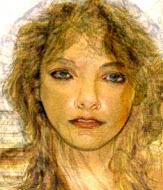
At its most bare-bones definition, the pre-Gardnerian definition of a witches' sabbat indicated a mass convergence of witches. When considering the "witches' sabbat" it is almost impossible to determine what's real and what stems from the witch-hunters' fears, prejudices, and fantasies. Virtually the only surviving descriptions and information regarding European witchcraft and post-Christian pagan practices derives from witch-hunters' records. To put this in modern context, it is as if knowledge of achievements by those of Africa-derived ancestry was dependent on records written by the Aryan Nation, Ku Klux Klan or similar white supremacist organizations. It is as if thousands of years of Jewish history were written by Nazis. And yet, regarding European witchcraft that is what there is. Nothing can be taken entirely at face value. One must constantly analyze, weigh the motivation and read between the lines.

Did magicians and devotees of ancient spiritual traditions gather secretly in remote areas such as caves, forests, mountain tops or swamps? If they did, wouldn't they do so on magically charged nights like the equinoxes or solstices or those periods when the veil dividing the realms is at its most permeable?

The very name 'sabbat' is an invention of the Inquisition, Nothing indicates that witches ever used that word until it was introduced by the Inquisition. It is not a coincidence that "sabbat" sounds amazingly similar to the Jewish "sabbath." They are frequently spelled identically. with the final "h" or without. (English spelling wasn't formalized until quite late.) The spelling "sabbat" is used exclusively here, as it is in modern Wicca, to avoid confusion and demonstrate that only witchcraft is being discussed.

Attempts were made by the Church to associate witchcraft and sorcery with Jews or vice-versa; defiant. disobedient people who refused to accept Christianity were initially all lumped together. Before witches had "sabbats" the Church claimed they had "synagogues." This was not intended as a compliment or as acknowledgement of witchcraft as religion. During the Middle Ages, official Christianity considered the beliefs and rites of Jews to be the absolute height of perversion. (After Jews were banished from many religions, the spotlight would be turned on witches.) To call something a "synagogue" or "sabbat" was intended as a vile insult.

In the Middle Ages, Church authorities used the term "synagogue" to describe any gathering of heretics; it was widely used by judges and inquisitors until the late sixteenth century. Sabbat, used as a synonym, became exclusively identified with conventions of witches.

Sabbat was but the most popular of the many names for conventions of witches. Scholarly synonyms included sagarum synagoga and strigiarum conventus. Popular synonyms included

  • Akelarre: a Basque term deriving from akerra or "billy goat"
  • Hexentanz: German for "witches' ball"
  • Striaz, striazzo and stregozzo; Italian terms for meetings of witches

According to witch-hunt trial records, the general format of witches' sabbats is as follows:

  • Male and female witches gather en masse at night, usually in remote or solitary places

  • Although sometimes the staging arena is a local cave or forest, in many cases, particularly for major, very well-attended sabbats, the location was distant and remote. Participants couldn't realistically get there and back in the time allotted, usually overnight. Thus witches were said to "fly" to sabbats using different methods including ointments, transformation, vehicles like broomsticks, on animals or on hag-ridden victims.

  • The witch-hunters' sabbat is presided over by a male devil or demon. First-timers must renounce the Christian faith and offer homage to the devil, who appears in various forms, human or animal.

  • Then there's a big party; dancing, feasting. orgies. Before leaving, the witches receive a gift (sort of like a goody-bag) of evil ointments, especially ointments enabling them to return or to commit maleficarum (evil witchcraft.)

Negative stereotypes feature prominently in descriptions of sabbats including indiscriminate, incestuous orgies, killing of babies, and ritual cannibalism, especially of babies. (Abortion wars may be at play here; images that depict women bringing baskets of dead babies to lay at the devil's feet could serve as modern anti-choice propaganda.)

Divinity is worshipped in the form of an animal; devotees copulate with the devil, often in the form of an animal. most frequently a goat, donkey, black cat or dog. They pay him homage in grotesque, obscene, sexually charged fashion.

 When did the sabbats allegedly take place?

The answer depends upon which trial transcript one depends upon. There are many variations.

Sabbats were held weekly; for the local coven or community. Fourteenth-century depositions form Toulouse emphasize that sabbats were held on Friday evenings, similar to Jewish devotionals. The Basque akelarre was usually held on Friday evenings, as allegedly were Italian witches' sabbats. Why? All kinds of possibilities exist:

  • because of attempts to defame witches by associating them with Jews?
  • because of attempts to defame Jews by associating them with witches?
  • because Friday belongs to the Goddess of Love?
  • because Christ was crucified on a Friday and so this was the ultimate disrespect?

There were also seasonal, ceremonial sabbats, three or four times a year, the equivalent of High Holy Days, when witches journeyed form far and wide. Meetings at the Brocken on Walpurgis or Midsummer's may be understood in this context.

Witches' sabbats were always nocturnal and always ended at daybreak. The rooster crows and witches disperse. Before there were notions of Dracula and blood-sucking bats, the word "vampire" was used in the Balkans to refer to witches. The legend that vampires must hide from sunlight and that their power is broken at dawn may derive from this concept.  

Where do witch-hunters say witches convene? At crossroads, cemeteries, and ruins (and what ruins were these? Frequently old pagan sites; ruins were often all that was left of previously sacred places); in the woods, in a cave, sometimes at the foot of the gallows, in the churchyard (which typically serves as graveyard, hallowed ground for the faithful), sometimes even inside the Church. Huge, major sabbats were held in far-away remote areas, typically high mountain peaks like Bald Mountain, the Blokula or The Brocken. Many of these places are genuine Pagan sites or areas that witches would value as magically charged. (And not everyone understands the cemetery to be a threatening place. Those who venerate their ancestors will find comfort there.) Nothing indicates that witches didn't meet at night.

Upon what, if anything did the witch-hunters base their distorted notions of the sabbat? Survival of the Bacchanalia? Survival of other Pagan rites? Resentment that other people were indulging in parties? Quite possibly.

How did the witches know when to attend the sabbats? According to witch-hunt era legend, witches and sorcerers have a small mark (sometimes described as "blue") somewhere on their bodies, which tingles or throbs at Satan's summons, (This image was invoked in Harry Potter and the Goblet of Fire in the death-eater's mark.)

If all the superimposed demonology is stripped away, what did witches actually do at sabbats?

They feasted. What did they eat at those sabbat feasts? According to trial transcripts, menus varied depending upon location; however, allegedly the foll0wing was served:

  • in Alsace; fricassee of bats
  • in England; roast beef and beer
  • in Germany: sliced turnips, allegedly as a parody of the host
  • in Lancashire: mutton, best if stolen
  • in Savoy; roasted children
  • in Spain: exhumed corpses, preferably close relatives

Regardless of what they ate, prisoners generally told their inquisitors that the food was cold and tasteless, presumably so that they wouldn't feel bad about not being invited to the party. A point is typically made that salt was omitted, as it is when offerings are made to djinn or fairies.

Attendees sang special songs, known as "Litanies of the Sabbat."  During the late Middle Ages, witches allegedly sang lists of angels, cherubim, seraphim, spirits, demons, and so forth requesting compassion, generosity, and mercy. It is fascinating to compare these songs to the contemporaneous sorcerer's practice of commanding and compelling spirits. A similar type of litany may be heard in the New Orleans musician Dr. John's recording "Litanie des Saints,"  which he describes in the CD liner notes as a mixture of Gris-Gris, Voodoo, Catholic, and African religions. These medieval witches' litanies may also be understood as the practice of simply listing names of spirits, a practice which survives among modern goddess-devotees as a way of honoring spirits and keeping them alive. Sometimes the only surviving aspect of a spirit or deity is an unforgotten name.

According to witch-hunters' fantasies, it's not enough for the witches to eat, drink, and be merry at sabbats. That's not bad enough. They must also mock and desecrate Christian rites.

One can actually observe this process during witch-trial transcripts. The witches initially discuss fairies or their equivalent. The witch-hunters aren't interested. They're theologians, sometimes men of science. Old wives' tales don't hold their attention, any more than they would a modern scientist. They have bigger theological fist to fry: they desire heresy. Under pressure and torture, the fairies eventually evolve into demons.

This is clearly seen in Isobel Gowdie's testimony. Isobel Gowdie is famed as the Scottish woman who, for whatever reason, voluntarily confessed to witchcraft. She initially describes fairies. Her inquisitors were bored and dissatisfied with this, Her Fairy Queen soon emerges as a male devil.

According to early modern Hungarian witchcraft-trial transcripts, somewhat less influenced by demonology than many other regions, the sabbat might better be described as a witches' party or ball, a gathering characterized by fun and merriment, attended by witches, their spirit doubles and/or spellbound victims. (Hungarian witch trial liberally feature accusations of kidnapping by witches. Witches transport the victims to sabbats and other locations.)

Hungarian and Italian women who were accused of journeying to sabbats described beautiful fairy-like sabbats, full of music, dance, and sensuality. Wonderful food and drink is served, better than daily reality. Their sabbats are pleasure dreams, not nightmares. Going to the sabbat was akin to a trip to fairyland, reminiscent of the fairy tale "The Twelve Dancing Princesses," where the girls slip out at night to revel so hard in magical underground grottoes that their shoes wear out. 

Sabbats of Modern Wicca

Witch-hunters' descriptions of sabbats have no relevance to modern practice. In Wiccan parlance, Sabbat is the term for eight seasonal festivals, marking the Wheel of the Year based on the ancient Celtic calendar.

The four great fire festivals include Imbolc, Beltane, Lughnasa, and Samhain. Samhain marks the beginning of the dark half of the year, the descent into winter. Beltane marks the beginning of the light half. These are the two portals of the year, birth and death. (Interestingly ancient Babylonian astrology also contains portals of birth and death, corresponding respectively to the Summer Solstice and the Winter Solstice, which correspond to the witchcraft celebrations of Midsummer and Yule.) Imbolc marks the quickening, the first approach of spring, Lughnasa marks the sacrifice of the harvest, the preparation for winter.

Mabon, Yule, Ostara, and Litha are frequently described as the lesser sabbats, although some traditions consider all of equal importance.

*****For further information on this subject and all things witchy, you should consider investing in this book - one of my "go to" books that gets "gone to" quite frequently!   

Disclaimer: No one involved in this blog or its contents may be held responsible for any adverse reactions arising from following any of the instructions/recipes on this list. It is the reader's personal responsibility to exercise all precautions and use his or her own discretion if following any instructions or advice from this blog.

Sunday, August 3, 2008

Sunday Surprise - Mabon

Well, Lammas, or Lughnassadh has now come & gone, and it's time to turn the wheel of the year. As we celebrate Lughnassadh, we can't help but be aware that summer is coming to an end, and autumn is fast approaching. The next Sabbat celebration we have to look forward to is Mabon - one of my favorites, because it means winter will soon be here, and Yule is on the way :) Today's post is from The Element Encyclopedia of Witchcraft a book which I have found to be full of information, and to which I refer frequently, along with it's sister volumes The Element Encyclopedia of 5000 Spells byJudika Illes and The Element Encyclopedia of Magical Creatures by Caitlin & John Matthews. If you can get your grubby little paws on these books, I highly recommend them! :)
Mabon

Pronounced "may-bon."

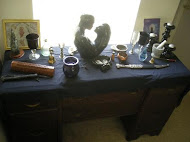
Mabon coincides with the autumn equinox, approximately September 21st. Day and night are temporarily equal; it is considered a time for contemplation and reflection. According to the old Celtic calendar, Mabon was the "second harvest" following Lughnassadh, It is a harvest festival in the manner of traditional Thanksgiving harvests, Mabon is the time to honor the trees, Its symbol is the cornucopia.

It is among the more difficult feasts for modern people to appreciate; it is more than just acknowledgement of the equinox and the coming of the winter season. This festival was a crucial spiritual experience for those responsible for gathering their own food, whether through the seasonal harvest or the seasonal slaughter, Food production was once a communal activity; in essence, the harvest, whether flora or fauna, sacrifices their lives so that people can live. Mabon is the festival of thanksgiving and purification that attempts to maintain vital spiritual balance.

The name "Mabon" derives from a hunting deity, the child of Modron. Modron and Mabon may be titles, rather than names, Modron Is believed to mean "mother" or "divine mother." Mabon may mean "young man" or "son."

Mabon is simultaneously the youngest and oldest of souls. He is eternally young and embodies male fertility. Reminiscent of stories of changelings, Mabon was stolen form Modron three days after birth and disappeared for many years: he is believed to have been held captive in the otherworld. Mabon fades into the afterworld at Samhain to emerge in spring, a male counterpart to Persephone.

Disclaimer: No one involved in this blog or its contents may be held responsible for any adverse reactions arising from following any of the instructions/recipes on this list. It is the reader's personal responsibility to exercise all precautions and use his or her own discretion if following any instructions or advice from this blog.

Sunday, July 13, 2008

Sunday Surprise - The Fairy Witch

Are you a witch?

Are you a fairy?

Are you the wife of Michael Cleary?

The Irish nursery rhyme memorializes Bridget Cleary ( February 1867 - March 1895), often described as the last witch burned in Ireland, and popularly known as the fairy witch of Tipperary. Although Ireland had among the mildest witchcraft persecutions in Europe, it is often credited with hosting the first and last witch burnings of Europe. Books sometimes chart the entire witchcraze from Pertonilla of Meath, as the first woman officially burned as a witch, to Bridget who died at the tail end of the nineteenth century, aged 28. In neither case is the parallel exactly accurate: women were burned as witches prior to Petronilla and continue to be burned today, although now in different parts of the globe, Furthermore, Bridget Cleary's death was not typical of a victim of the witchcraze.

Witchcraft was a crime during the Burning Times. Whether or not individuals were indeed practitioners of any sort, they were officially charged with crimes, tried according to an official process, convicted, and condemned to capital punishment, Their deaths, however horrific, were legal. No one was charged and punished for these deaths,

Those convicted as witches were considered the guilty parties.

Bridget Cleary, on the other hand, was killed by her husband in the process of what he described as an exorcism: he allegedly believed that she was a changeling and was attempting to get his wife back. Michael Cleary was subsequently arrested and charged with the murder of Bridget Cleary, He was convicted and served a prison sentence.

It is probable that what happened to Bridget Cleary was not unique: what was unique - and remains so in much of the world - is that someone was held responsible and punished for causing the death of a woman many believed to be a witch. Her story pulls the blankets off the suppressed subject of the Fairy Faith -both it's genuine practitioners and those intensely opposed to it. Her story is also very revealing regarding the perceived blending or interchangeableness of witches and fairies, The ordeal that she underwent at the hands of her husband, neighbors, and family is certainly reminiscent of witch-trial ordeals.

Her maiden name was Bridget Boland. She attended school, off and on. until she was 14. At the age of 20 she married Michael Cleary, a cooper, on August 5, 1887, He moved into the house Bridget shared with her parents. The two couples lived together in that house until the death of Bridget's mother, one year before her own death. Bridget's mother, Bridget Keating Boland died on February 1, 1894, leaving Bridget Jr, alone in the house with the two men who would both be implicated in the death. 

According to her father's court testimony. Michael Cleary asked him "Don't you know it's with an old witch I am sleeping?" Whether this meant Michael believed her to be a changeling or whether this meant he opposed her forays into the Fairy Faith is subject to interpretation.

Both Bridget's and Michael Cleary's mothers were reportedly fairy doctors. It is possible that Bridget was training to become one as well. She had a strong independent streak, noticed and resented by some, She had a reputation of being haughty, proud, and "fine" and was disliked by some of her peers - young women who mostly lived a very different existence from Bridget. She was independent and enterprising: she owned a Singer sewing machine and kept chickens; thus Bridget, unlike most other women in her community, had an independent income. Keeping poultry was among the very few ways to evade complete male control of the purse strings: she sold eggs and also took in sewing.

Also unique among her female contemporaries, after eight years of marriage Bridget was childless and rather than seeming to mourn this, she seemed to relish her freedom. With no children, Bridget could come and go as she pleased and she did. She sewed and sold eggs, earning her own money, giving her a measure of economic independence.

In the wake of the scandal following her death, Bridget's neighbors and family were interviewed about her. According to reports, she had a defiant streak and wasn't easily cowed by authority. Joan Hoff and Marian Yeates, authors of The Cooper's Wife is Missing, describe Bridget as possessing what neighbors perceived as a "disturbing habit" of looking men in the eyes a trait allegedly characteristic of Pagan women.

Bridget's mother had a reputation as a "fairy expert" and bore something of a reputation as a witch, Perhaps Bridget inherited her interest in the Fairy Faith from her mother. Certainly she displayed a fascination with fairies and, especially in the last year of her life, following the death of her mother was often observed visiting two local fairy forts, leading to gossip by neighbors who speculated as to her motivation for the visits. Among the reasons suggested:

  • She was trying to make contact with the soul of her dead mother
  • She was rendezvousing with a lover
  • She was irresistibly lured there by the fairies

Michael Cleary had his own personal history with the fairies: as a boy, his mother (also named Bridget) had allegedly run off with the fairies, disappearing for three days, Following her return, she allegedly began operating as a fairy doctor, Michael had strong feelings about fairies, too: he feared and hated them, and was obsessed with the notion that they would abduct Bridget - or that she would willingly join them.

The first known indication of dissension between Michael and Bridget occurred around Yuletide 1894. Michael allegedly feared she'd been abducted by fairies, and he ordered Bridget not to go to the fairy forts. She defied him and continued to go. (After her death, witnesses came forward saying that Michael had threatened to burn her if she went back.) She was observed visiting a fairy fort on February 1, 1895, the first anniversary of her mother's death.

On March 6, 1895, Bridget returned home in the late afternoon, ostensibly from delivering eggs, complaining of feeling unwell. (Witnesses suggested that she had been observed at the fairy fort that day.) She exhibited signs of fairy-related illness: aches. pains, and chills. She was irritable, described as "distant" and demonstrated some memory loss. Changes in temperament and appearance are among symptoms of fairy abduction, (In other words, a fairy is believed to have replaced or be impersonating the person believed to have been abducted.)

Initially, the family requested conventional medical attention. A local physician was requested to pay a house call. It took the doctor four days to respond following repeated requests. He examined Bridget, and determined nervous exhaustion and slight bronchitis. Despite requests for the doctor's arrival, Michael allegedly suspected that his wife had been abducted by fairies, who had replaced her with a changeling. Michael perceived that Bridget was now two inches taller than previously and that she seemed, in his words, "more refined."

For nine days, Bridget lay ill with a mysterious ailment, During these nine days, assorted friends, neighbors, and relatives came in and out. Her husband, convinced that his wife had been abducted by the fairies, searched for help from two sources - the Church and fairy experts. He was heard arguing with Bridget who was allegedly heard to cry out "If I had my mother, I would not be this way."

Nine was a magic number; one theory allegedly subscribed to by Michael, suggest that if the return of the abducted person is not affected within nine days, they are lost forever, although this contradicts the many tales pf changelings returning after seven years in Fairyland.

On at least three occasions requests were made for a priest's assistance. Priests were traditionally called in to exorcise fairies, considered akin to demons. This is "folk Catholicism" and was not standard practice even then. Theoretically it was not permitted, although allegedly it was common practice. A priest met with Bridget twice, Father Ryan spoke to Bridget for over 20 minutes, later describing her as coherent and intelligent. He said he thought her behavior might indicate the onset of "brain fever" and so decided to administer the last rites, just in case...She allegedly did not swallow the communion wafer: one witness claimed that she spat it out surreptitiously. this further confirming suspicions that Bridget Cleary had been abducted and that what lay in her place was a changeling.

Shortly afterwards, with the participation pf other neighbors and family members including her father and cousins, Bridget Cleary was killed by her husband and another relative, John Dunne, a local "fairy expert." Dunne was not a fairy doctor in the traditional sense. Two types of "fairy experts" existed:

  • Fairy doctors, practitioners of the Fairy Faith, who were enthralled by fairies trained by them, and practiced arts associated with them
  • What are essentially fairy exorcists, whose techniques drew heavily on Roman Catholic rites of exorcism and witchcraft trial ordeals; fairies were believed by these practitioners to be akin to demons; those allied with them were akin to witches.

Bridget was prescribed an herbal formula created from bitter herbs called "Seven Sisters Kill or Cure." It did neither. Michael then purchased an herbal cure called "Nine in One Cure," more potent and more exceedingly bitter than the Seven Sisters mixture. In these nine days, Bridget had not been permitted to leave her home, she was in a weakened condition from her mysterious illness and perhaps from lack of nourishment: attempts were made to starve out the changeling, She was apparently afraid for her safety and requested that the police be called. This was not done.

Witnesses described the final ordeal of Bridget. A sixteen year old neighbor stood in the corner of the room holding a candle for illumination. John Dunne sat on the bed gripping Bridget's hair. Two other men held her body down, each pinning down one shoulder, while another man pinned down her feet. Michael attempted to force Bridget to swallow the Nine in One herbal cure in new milk, yelling at her to "Swallow it, you devil!" and "Take it, you old witch!"  Her mouth was pried open: Bridget fought back, only confirming the belief that she was fairy-possessed. It ultimately took six men to pour the liquid down her throat.

After Bridget was forced to swallow the Nine in One Cure, the family waited three hours for a "change." When none was forthcoming, the "exorcism" escalated and the threat of fire was introduced. At midnight on March 15th, Bridget was dressed in her finest clothes including a red petticoat in order that she could "go amongst the people" - however one interprets this. ("The  People" is a euphemism for fairies.)

Urine was then thrown over her. She was choked, force-fed urine and herbs and pushed to the ground, her head knocking against the floor. Her clothes were stripped off, Bridget was shoved over the grate into the four-foot by four-foot fireplace, like some fairy-tale character (the witch in Hansel and Gretel for instance) in a fetal position with her legs sticking out. According to a witness there was a low fire burning in the fireplace, hot enough to heat an iron grill but not hot enough to boil water, She was threatened with a hot iron poker. ( Fairies allegedly fear both iron and fire so the combination was perceived as doubly powerful.)

Michael Cleary poured the contents of a can of paraffin oil over his wife and set her on fire. A witness claimed that the two women present attempted to put out the fire but Michael pushed them away, threatening to "roast" them as well. He proceeded to pour more oil over her burning body. According to a witness, Michael Cleary said he wasn't burning his wife; he was burning a witch who would go up the chimney.

Another witness, (Protestant neighbor Minnie Simpson) later asserted to the police that the family members believed that the person was not Bridget but a witch, although she claimed that she herself (Minnie) did not. She did not explain, however, why in that case she didn't help Bridget, nor did she point out that she was among those who supplied the urine thrown on Bridget.

At this point, people allegedly thought Bridget was "cured" and left. Michael asserted that he wasn't sure and wished to remain with Bridget for further observation, promising to meet up with family members later at his father's house, although he apparently never arrived,

Based on the testimony of witnesses, Bridget was still alive when they left, It is unclear exactly when she died, however her dead body was discovered on March 22, 1895, 1,300 yards from the Cleary home, wrapped in a sheet and buried in a shallow grave. Her entire back and lower abdomen had been burned; roasted clear to the bone, her internal organs visible. Her right hand was severely burned but her face, hair. breasts, shoulders, neck, legs, and feet remained unscathed, There were marks about her face and mouth and bruises on her neck, believed to be the result of choking, Death was caused by extensive burns, with the official cause given as "shock due to burns."

Eleven people were arrested in connection with the murder of Bridget Cleary, including the 16-year-old neighbor who stood quietly in the corner, holding the candle. There are two ways to understand the saga of Bridget Cleary:

  • There is no possession, there's no such thing, therefore it's deadly superstition or an excuse for fatal spousal abuse. ( And local gossip alleged that Bridget had a lover.)
  • Regardless of whether Bridget was or was not possessed her husband and family feared rather than understood fairies, The Fairy Faith was not charming to them. Fairies were considered devils to be exorcized; the "changeling" was considered a witch to be burned as were perhaps practitioners of the old Fairy Faith.

Bridget Cleary's mother was locally rumored to be a witch, If one believes that Bridget was attempting to follow in her late mother's and mother-in-law's footsteps and become a traditional fairy doctor herself, perhaps she was burned as a witch to prevent achievement of her goals. The methods of exorcism to which her family resorted were not typical of the Fairy Faith, whose practitioners openly derived their skills from fairies, Instead the herbal cures and rituals were heavily influenced by the Roman Catholic rites of exorcism and also by published accounts of witch-trial ordeals. Trial testimony indicated that invocation of the names of the Father, Son and Holy Ghost formed a significant part of the exorcism ritual.

Although Michael Cleary was mocked for believing in fairies, his actions were not those of a practitioner of the Fairy Faith but were grounded in folk Catholicism, Bridget's screams were ignored because they were considered the screams of the invading spirit (fairy and/or demon). Lying in bed, Bridget told a visiting cousin that her husband was "making a fairy of me now" and that "He thought to burn me about three months ago." How to interpret these statements? Did Michael Cleary genuinely believe she was a fairy, or beneath the mask was this just a case of spousal abuse, or both? Was the goal to break the fairies' charm or to break the spirit of an independent woman?

The crime was a major public scandal; the "fairy murder" was popular with the media and drew international attention, much to the displeasure of the local authorities who felt it made the region appear primitive and ignorant. Although Michael Cleary and Bridget's family were arrested for her murder, there was ambivalence toward Bridget as well. She had not been generally beloved; whether "abducted" or not, she had clearly been dabbling with fairies. Attitudes toward Bridget may be demonstrated by her funeral, or lack thereof: In a macabre denouement, Bridget's body could not be released to her family, all of whom had been arrested and were confined on Clonmel Goal, Police called for the clergy but no priests in the district responded: Roman Catholic priests were strictly charged against performing sacraments where fairy-craft was suspected. Those who died under suspicion were refused Church burial.

The body of Bridget Cleary was finally buried at night by four policemen who read part of the burial service over her body. They obtained a simple coffin for Bridget and brought her to the Roman Catholic cemetery at Cloneen. where she was buried outside the church walls beside the unmarked grave of her mother near an oak tree. Bridget Cleary and her mother lie together in unmarked graves outside the church walls. No headstones exist but two stones mark the site.

During the trial, absolutely no discussion of fairies, or even any reference to them, was permitted. Michael Cleary was found guilty of manslaughter, not murder, and sentenced to 20 years imprisonment, of which he served 15. Other defendants received lesser sentences depending upon perceived involvement.

Further Reading:

The Burning of Bridget Cleary

The Cooper's Wife is Missing  

Information obtained in entirety from The Element Encyclopedia of Witchcraft